First Ever Scoliosis Conference for the Ones who Live It: BioniCon 2026
By Theresa Shay
I spent last weekend at BioniCon, the first-of-its-kind conference for adults living with scoliosis and spinal fusion. Held in Philly, the conference was the manifested vision of Meredith Montana, founder of The Bionic Project. “Bionic” refers to the spinal fusion that can be used to treat scoliosis. With an unfused spine, I was the minority in the group.
Regardless of how many moveable vertebrae we each carried through the door, we bonded, shared, embraced, cried, laughed, admired, supported, recommended, and empowered one another.
On the drive to Philly, I realized that never in my adult life have I been in conversation with another person who grew up in treatment for scoliosis. That surprised me in two ways: 1) that this was the case, and 2) that I'd never realized it previously.
At the end of a TriYoga® scoliosis program, students have said that you don’t know what you’ve been missing until you experience how good things can be. They refer to the comfort and relaxation in the body that comes from learning how to support their asymmetric form.
This weekend revealed the same for me, regarding community. I hadn’t realized that I was missing anything, but the recognition, affirmation, and understanding I found at BioniCon opened up a flood of gratitude and healing.
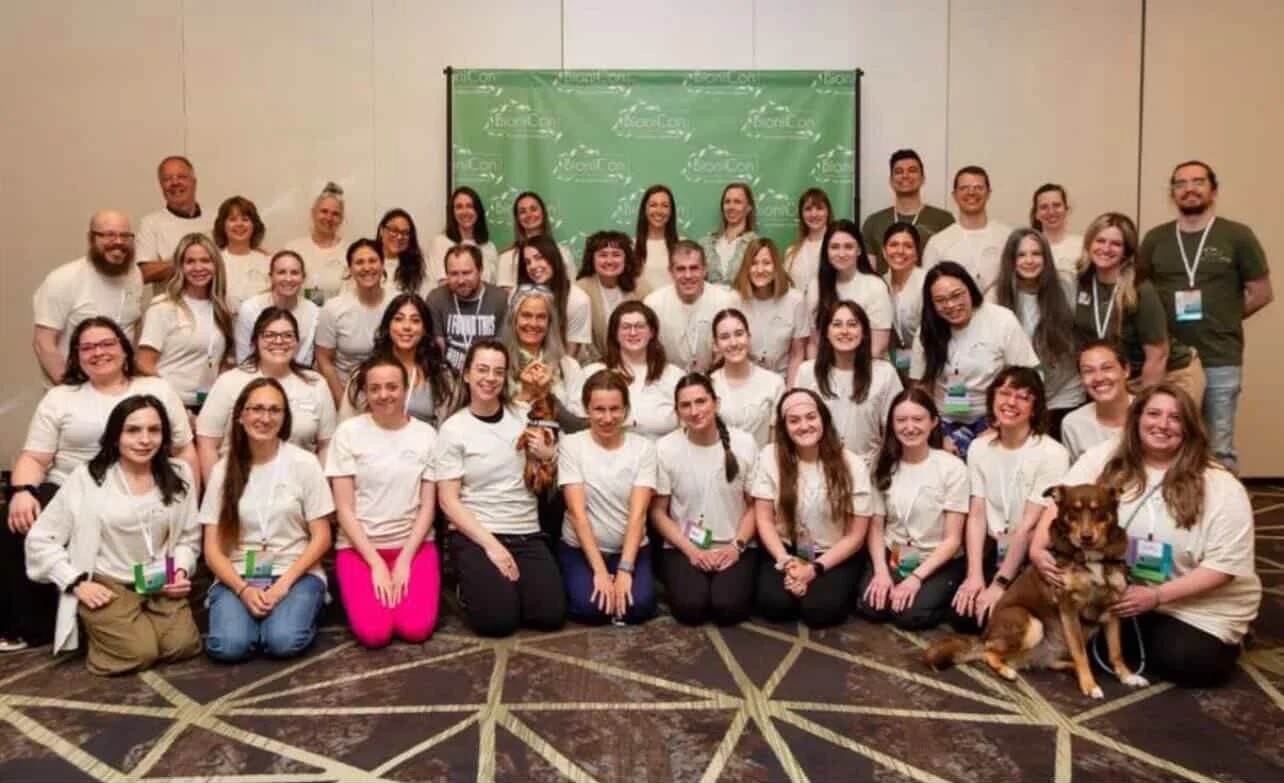
None of us had ever gathered in such a group, surrounded by people who could personally relate to the daily experience of living in a spine that doesn’t know center. As people presented their favorite scoli-supports at Show-n-Tell, a wave of recognition rolled in: these people love heat, soaking, bodywork; have particular requirements for comfortable chairs and travel pillows they’d never leave home without; balls, rollers, and wands for self-massage; an emergency supply of pain meds in the suitcase in the event travel sends the body into a tailspin; and the one that raised my eyebrows, a new friend who also can only get her ear buds to fit well on one side. (Ears are my current challenge.)
It wasn’t the specifics as much as the gestalt that made gathering so refreshing. We belonged. Many shared painful stories about the not-belonging they’ve experienced in life. We created space and held each other well.
Conferences for adults with scoliosis up until now have been geared toward the providers. One conference, for example, states it is for “anyone involved in the treatment of spinal deformities including surgeons, residents and fellows, physician assistants, nurses, and other allied health professionals and researchers. The podium presentations will provide valuable information to all individuals caring for patients with spinal deformities.”
At BioniCon, we who have been treated by those professionals were the focus, not the object. Our scoliosis was held up not as a deformity or problem, but a reality and invitation to embrace.
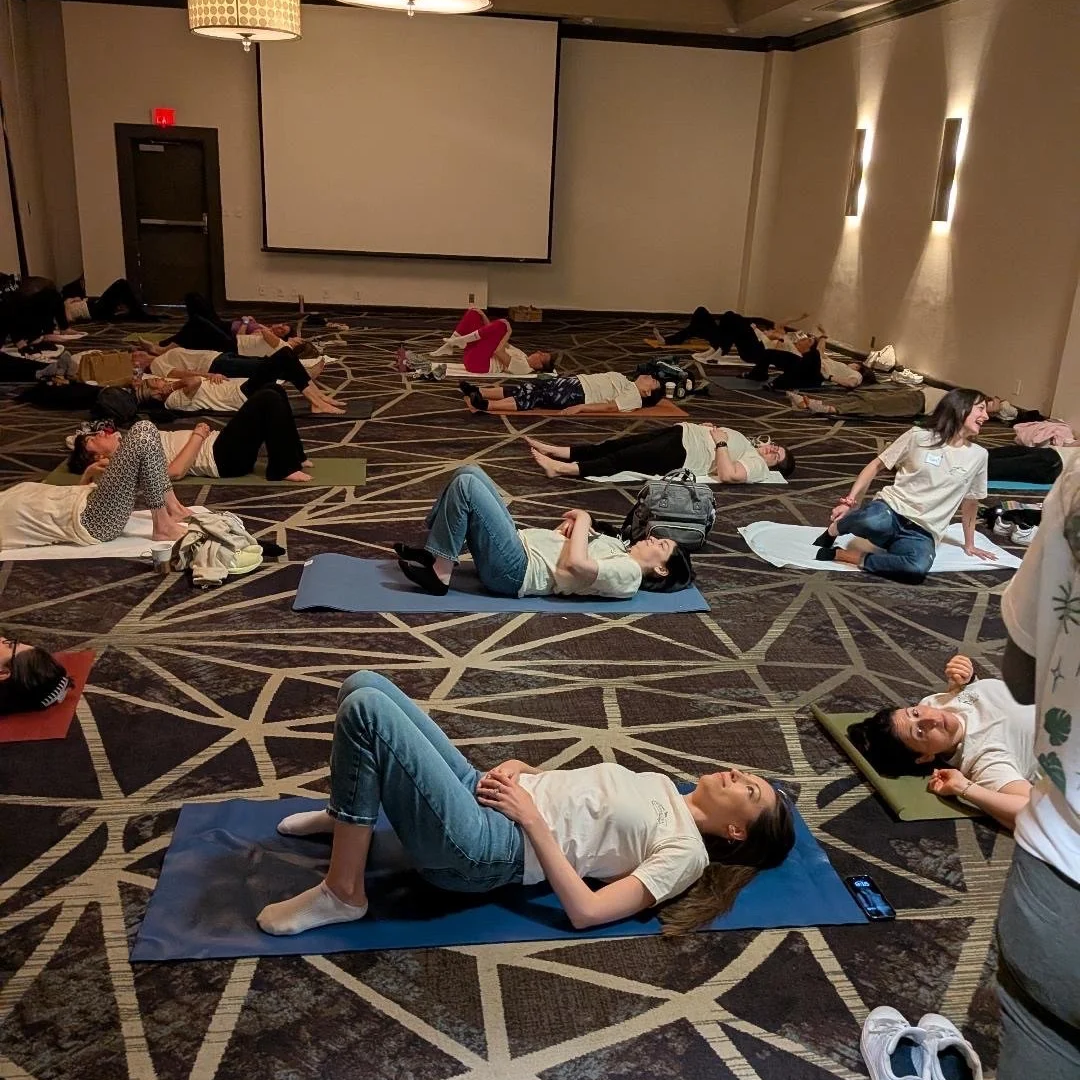
A point of agreement was that we did not receive what we could have used from the medical world in our movement toward “adulting with scoliosis,” as scoliosis author Caroline Bell (read Tangled with the Curves) titled her talk. Doctors gave us treatments they were trained to give (bracing and surgery), and they gave the treatment of no treatment, known as “watch and wait.” This is far too limited a list, in our collective opinion. Imagine if my orthopedist had directed me at age 10 to start using my breath to connect to my body and my growing curve. What if I had approached adolescence with the knowledge of how to use my muscles to hold my spine out of its pattern? What if my doctor had recommended a conference for kids with scoliosis, as now exists? What if I had been handed Tangled in the Curves when it was clear I was leaving the “watch and wait” track and moving toward bracing?
Even those who were treated with spinal fusion were dismissed, as I was from bracing, with no recommendations on how to care for the spine and the whole body going forward. No physical therapy. No exercise program. No scoliosis-specific movement training. No mind-body connection. No organized mentoring to learn from women (yes, scoliosis mainly affects women) who had gone before and could tell us what works.
Meredith shared a post-conference Instagram carousel that said, “BioniCon 2026: the beginning of everything.”
“Everything” is this: our lived experience of navigating the scoliosis terrain is rich. It is to be shared and passed down, passed on, passed along. Coming together as community is the support we didn’t realize we were missing, a motivating and healing experience.
What I heard from presenters and participants over the weekend aligns to what I have been coming to on my own over the past year and a half, reinforcing my commitment to this very precise sliver of the population.
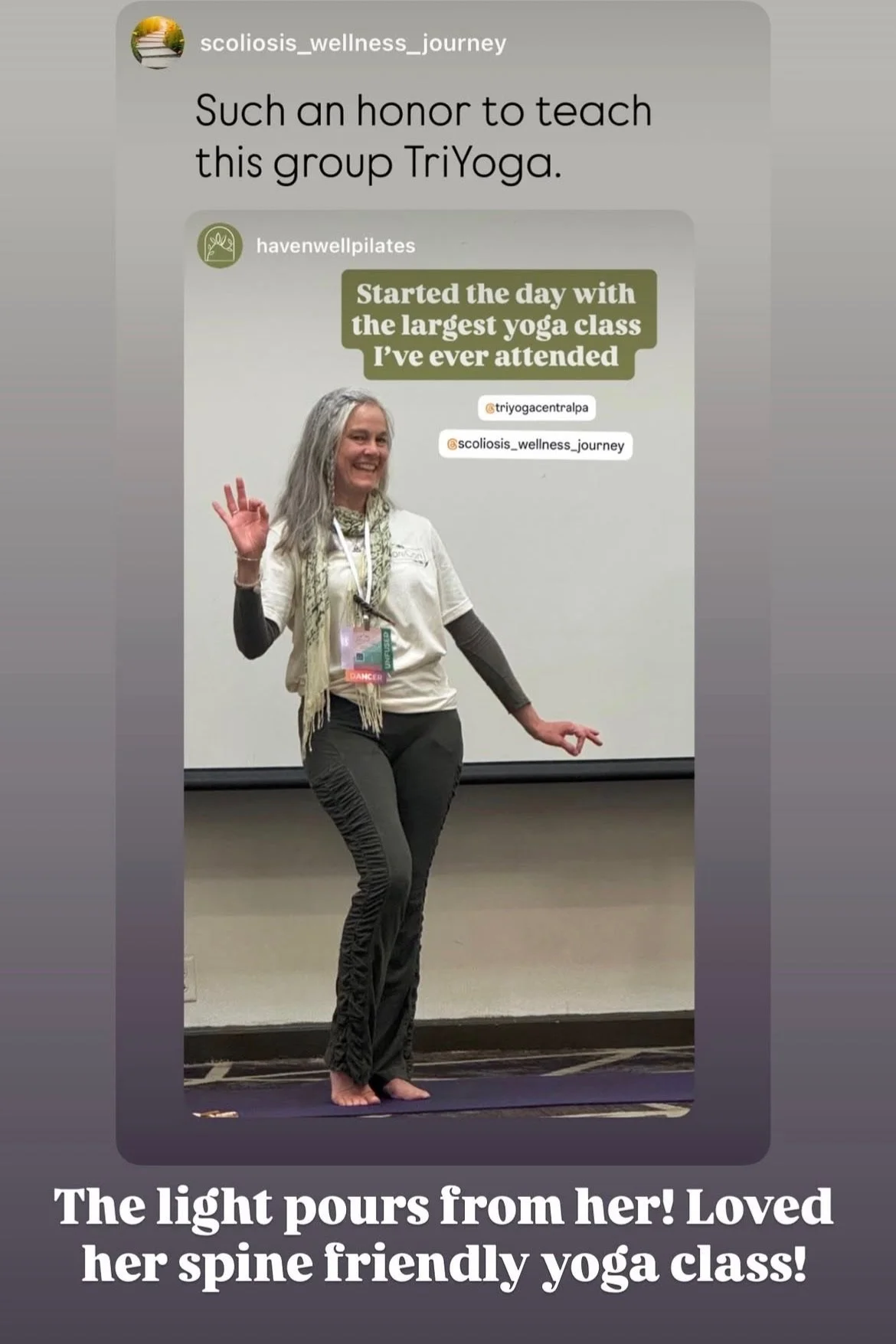
I know movement works for bodies. For scoli humans, movement is non-negotiable. I know that scoliosis-specific movement creates ease, confidence, and intelligence in the asymmetric body. I know that aging well with scoliosis requires attention prior to menopause, when pain often appear for those who had not experienced pain before. I know that the medical world has not caught up to the realities I understand, and I can’t wait for them to wake up.
My path gifted me intelligent, conscious movement very early when I met TriYoga in my twenties. Wisdom about yoga for scoliosis arrived just as that was needed for this body. I am called to share, support, and help my fellow scoli humans. Caroline Bell closed her sharing about Adulting with Scoliosis with the charge, “Scoli warriors, deploy!”
In the loving, non-harming energy I treasure, I return from BioniCon with a new collection of fusioneer (as they call themselves) friends, and unfused friends who, like me, are “bent toward hope”. It’s a new day in the world of scoliosis, and we are up with the dawn, ready for action.
Learn more about The Bionic Project here.

Theresa Shay is the founding director of TriYoga of Central Pennsylvania, where she teaches weekly yoga and meditation online and trains others to teach TriYoga®. Each week, she shares wisdom cultivated from decades of TriYoga study and practice.
Learn more about her here. Theresa can be reached at Theresa@PennsylvaniaYoga.com. Find her on Instagram @theresa_of_triyoga for more inspiration and light.