Five Supports for a Daily Practice: Developing Abhyasa
By Theresa Shay
Today is Day 46 of 2026, if you are reading this the day I am sending it out. Many in this community just completed 40 Days and an Intention – our annual New Years meditation challenge, and I’m still tracking.
Despite the incredible momentum and reports of success everyone shared during the challenge and at the closing celebration, a huge question has risen: Will you practice this day?
Yogis have long understood the transformational opportunity of a steady practice. The word in Sanskrit is abhyasa. Paired with vairagya, dispassion, the steady practitioner is promised a calm mind. Steadiness is not the only quality of abhyasa, however. One must be steady over a long period of time to experience the gift that comes from the grit of commitment.
I once got curious: how long are we talking? 40 days? 40 weeks? 40 years? 40 lifetimes? I asked the wisest person I know, my yoga teacher Yogini Kaliji. The answer? “A looooooooooooong time.” She twinkled at me, providing extra motivation to commit, all over again, to being steady.
If you have, or long to have, a daily practice of anything – yoga movement, meditation, physical therapy exercises you’ve been prescribed, gratitude, walking – here are some tips to support you.
1. Rhythm: The body loves rhythm. Think of the heartbeat, the digestive tract, the breath rhythm, the sleep cycle. The body responds to steadiness because it signals to the nervous system that no threat looms. We are not on alert; we can turn toward resting, digesting, and creating. Choose a consistent time, greet it as often as possible, and let the rhythm become a natural part of how you do the day. If your new rhythm requires relinquishing an old one that is frittering away your time, all the better.
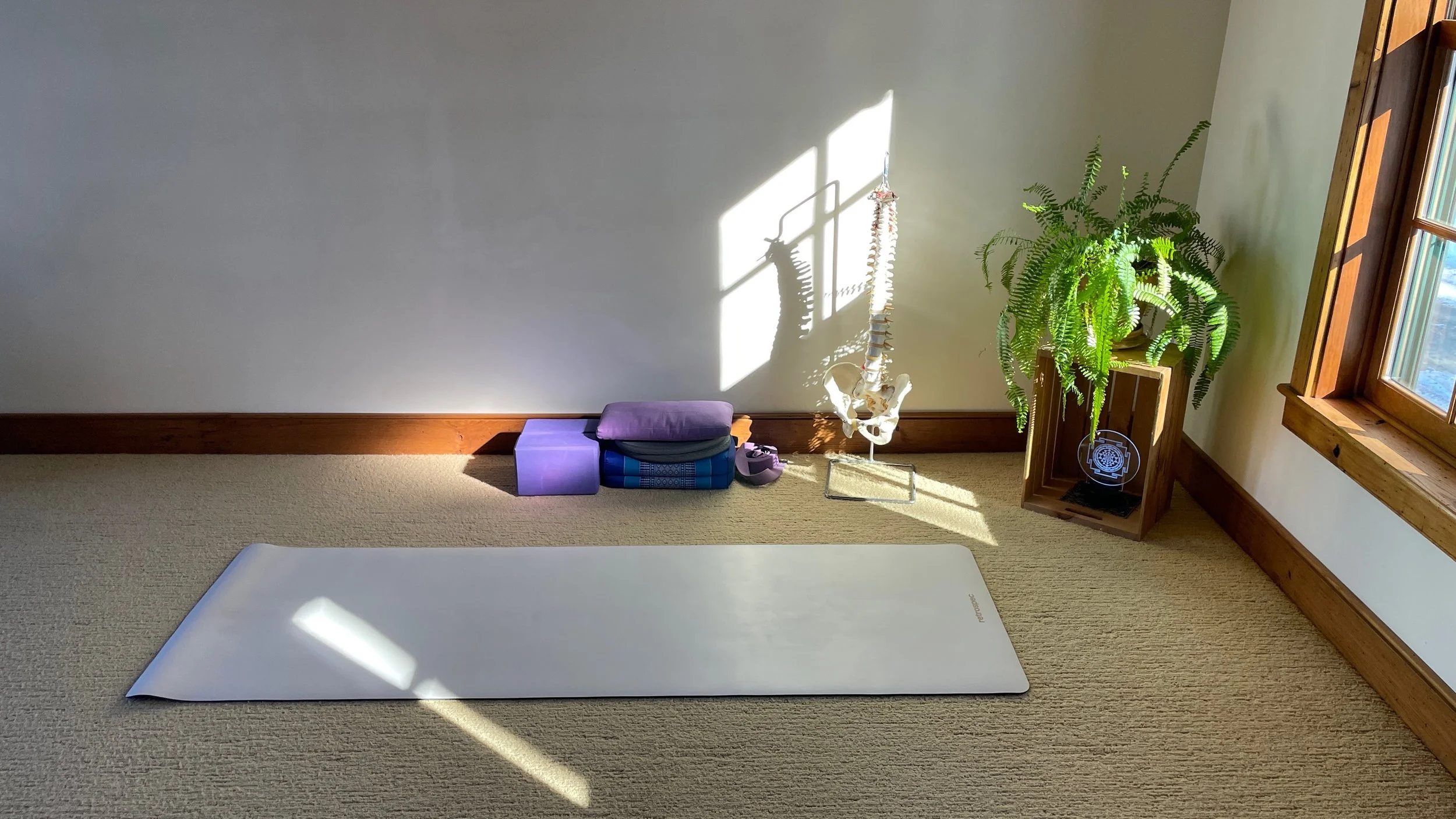
2. Space: The senses respond to place. Creating an intentional and inviting space for practice can capture your attention just as well as the ping of a text. If you see your mat or cushion or walking stick waiting, let yourself be drawn like a needle to the magnet. Within the constraints you have, make a sweet spot for yourself and dissolve the obstacle of having to set up your space every day. The one minute it takes to roll out my mat has derailed me more times than I like to say. If needed, close your eyes and practice right in the middle of the laundry piles. No problem.
3. Attention: In middle school, I could put in time for my cello practice, get a check in all seven boxes for the week, and know – even then – that some days I was just going through the motions. As an adult, I value being able to see how focused on the moment I can be. Some days I’m 100% present. Some days I’m not. Daily practice is a chance to check in, to take your “presence pulse”, look at yourself in the inner mirror. This connection helps you move into the day, even on the days when all you meet is resistance inside. It’s the showing up again and again over a looooooong period of time, without judgement, that creates transformation. Learn to see yourself clearly.
4. Intention: Choose a practice that touches your heart. Physical practice may help your back hurt less or your knee find more stability. Attend to that practice with breath awareness, and you’ll energize yourself as you support your physical body. Pay attention to what’s happening in the mind as you practice, and voila! You’ve showed up for your body, your mind, and your spirit. The results are very different than forcing yourself to get on the treadmill to burn off last night’s ice cream, hoping your jeans will fit better soon. Let your intention be connected to the biggest, brightest, most joyful, loving Self you can imagine. This energy will draw you up the mountain until you are flying effortlessly.
5. Keep letting go: You could attach to so many things: whether you’re seeing results; whether you’re doing it right; that you’re sick, tired, bored, discouraged, doubtful, ready to try the next thing. Let it all go. The yogis long ago identified nine obstacles to practice, and likely, you’re simply facing one of those fluctuations in the mind. Pay attention (#3) and respond as needed, but don’t move the way the mind blows. Move in harmony with calm, steady rhythm. This will require plenty of letting go. Now you are practicing vairagya, dispassion. Hand in hand with your steady practice, you will transform.
Take it one day at a time, then another, then another, then another, that’s all a loooooooong time really is, after all.

Theresa Shay is the founding director of TriYoga of Central Pennsylvania, where she teaches weekly yoga and meditation online and trains others to teach TriYoga®. Each week, she shares wisdom cultivated from decades of TriYoga study and practice.
Learn more about her here. Theresa can be reached at Theresa@PennsylvaniaYoga.com. Find her on Instagram @theresa_of_triyoga for more inspiration and light.